Ensor during his Academy Years: New Findings from the Ensor Research Project

The renowned journal npj Heritage Science has published a new research article by Annelies Ríos-Casier. As part of her PhD research, she works closely with the KMSKA’s Ensor Research Project, which explores Ensor’s creative process by combining material-technical research with art-historical analysis.
Through this interdisciplinary approach, the museum is steadily establishing itself as a leading centre of expertise on the artist. While examining James Ensor’s Figure Study: Old Man with Beard (1878), Ríos-Casier made a remarkable discovery.
An Exciting Revelation
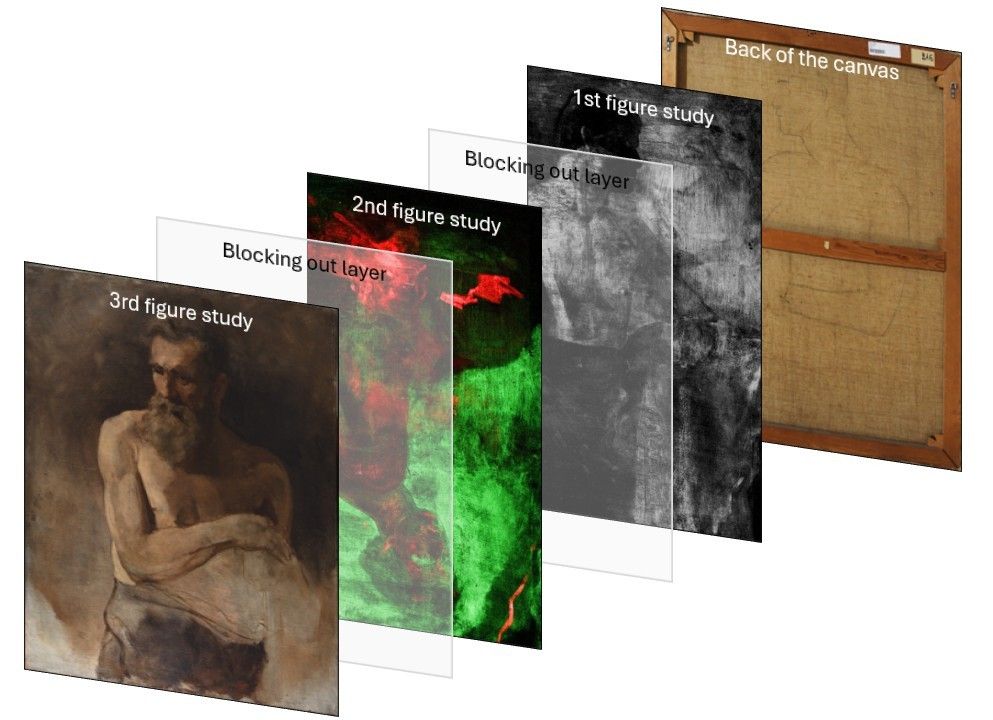
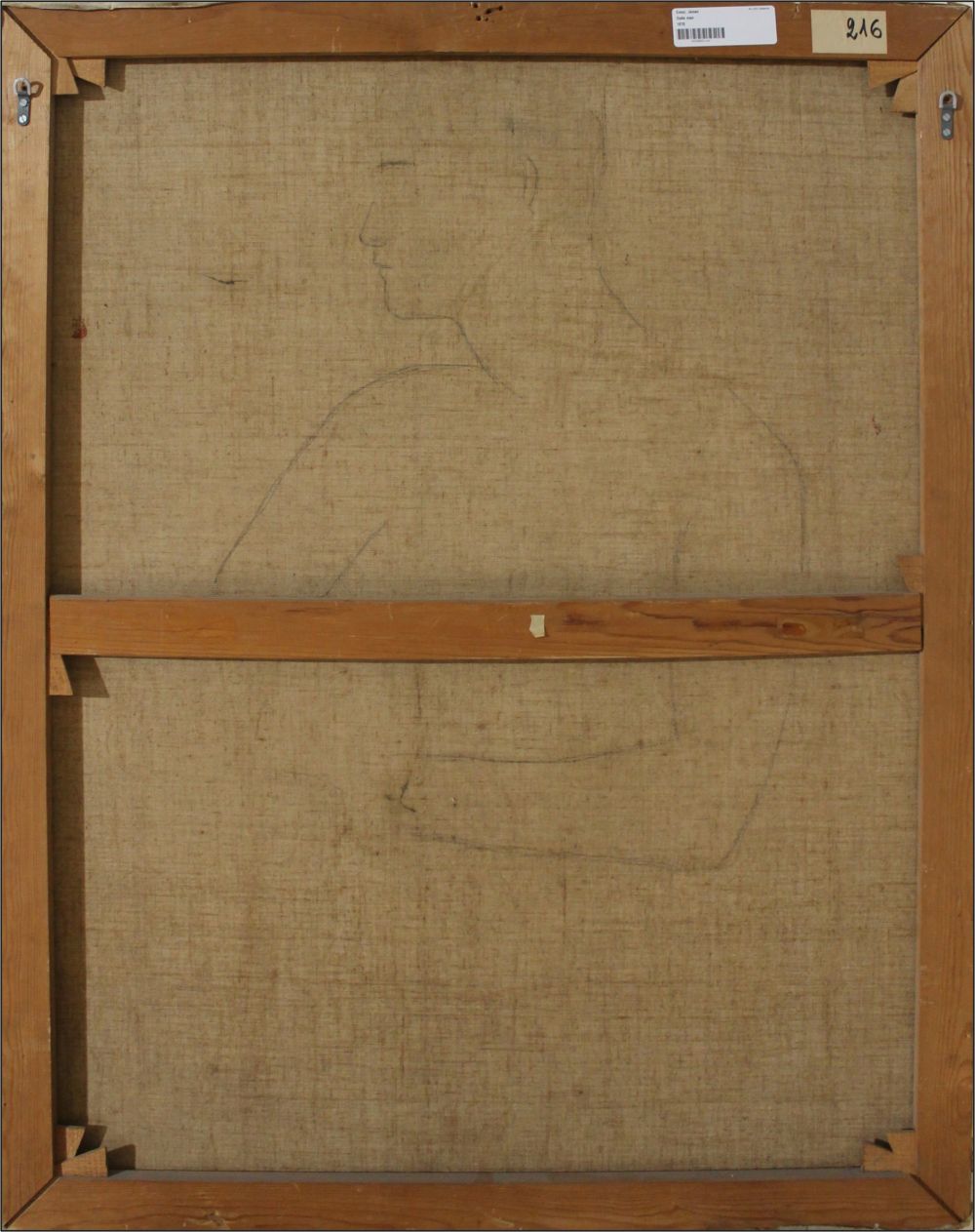
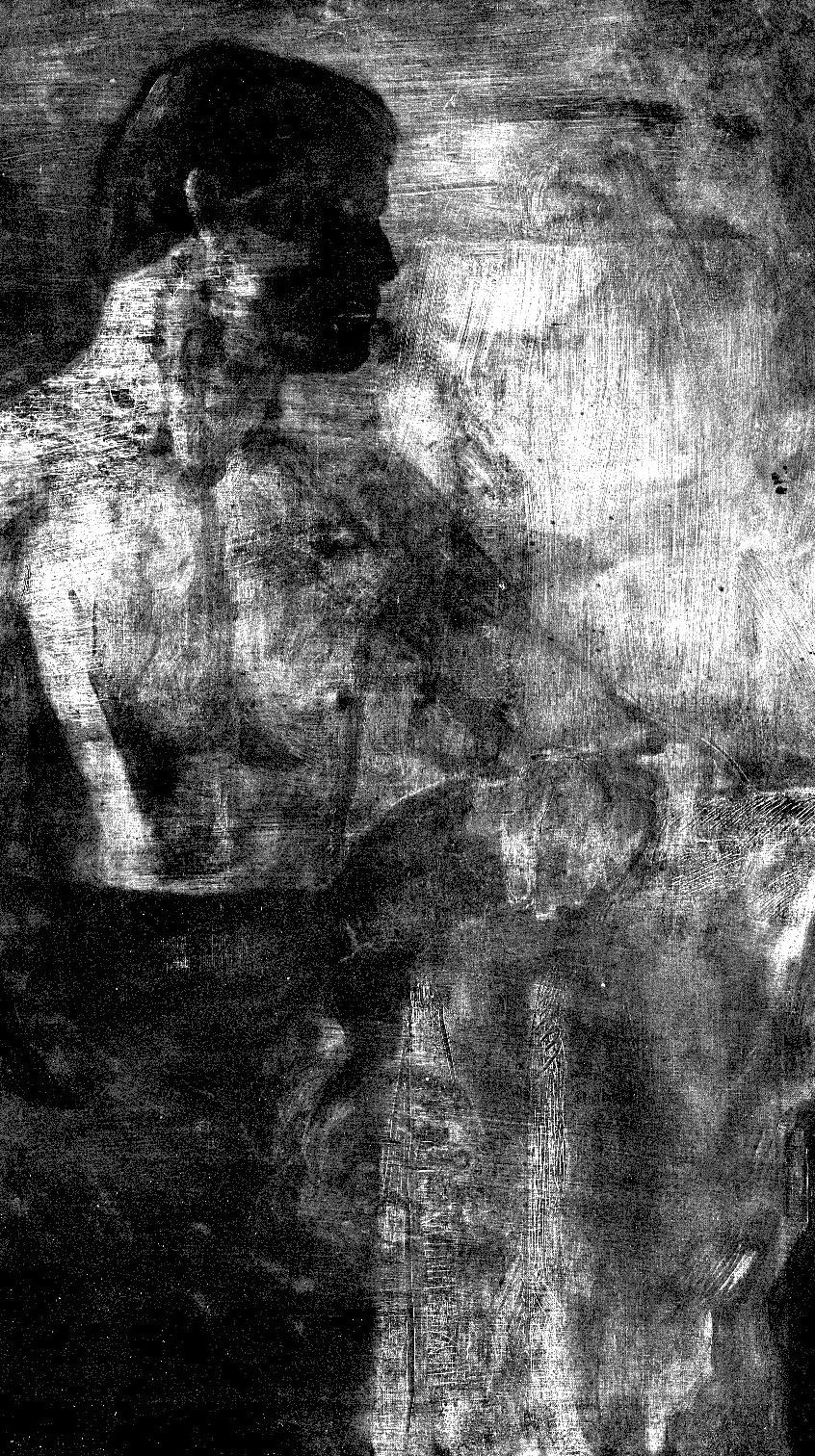
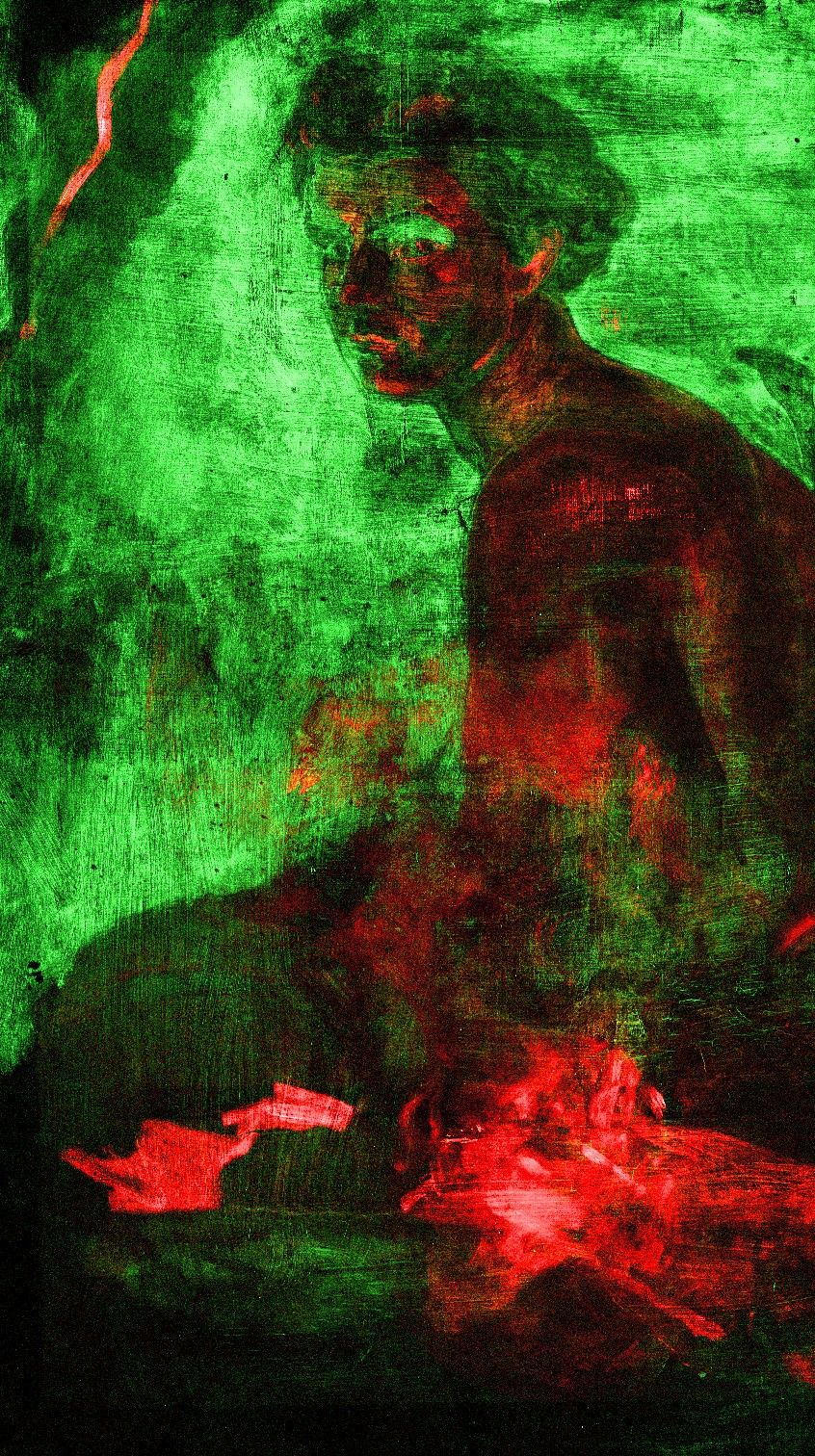
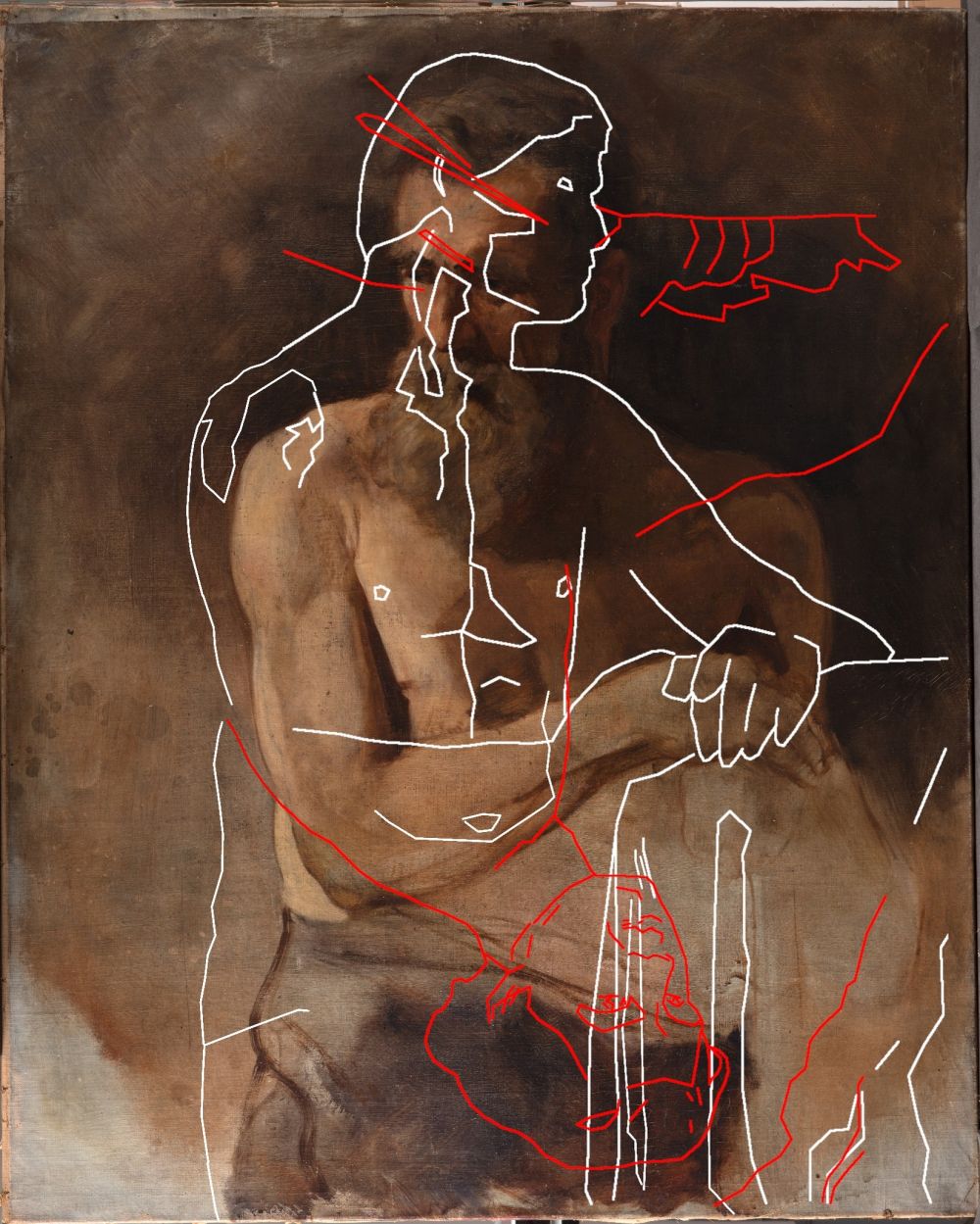
During the investigation, two microscopic paint samples were examined using an advanced microscope. This allowed researchers to analyse the paint layers one by one and reconstruct the painting’s history. The study revealed that Ensor often covered earlier compositions with a layer of white paint before reusing a canvas. In Old Man with Beard, the face of an earlier figure study can still be discerned beneath the surface. Because Ensor rotated the canvas before creating the new composition, the face now appears upside down.
A Connection with the KMSKA
Although Old Man with Beard is now part of the Mu.ZEE collection, it also has a remarkable connection to the KMSKA. The old man depicted in the painting is based on the same model as the figure Ensor painted over in Still Life with Chinoiseries (1880), a work in the KMSKA collection.
Earlier research conducted within the Ensor Research Project revealed that beneath the paint surface of Still Life with Chinoiseries lies a figure study of a bearded man. The figure stands upright with a bare torso, wearing a loincloth, and is shown with his face and body turned to the right. The study also demonstrated that Ensor initially painted the face frontally before later reworking it into a three-quarter view. This alteration suggests that he continued to experiment during the painting process and did not always determine the final composition in advance.
When Ensor eventually painted the still life over this figure study, he did not apply an intermediate white layer. As a result, traces of the original image remain visible today. Those who know where to look can still discern the man's forehead, nose, and part of his beard beneath the paint surface.
In Search of Ensor’s Story
Every artist has to start somewhere, often through formal training. For James Ensor, that journey began at the Royal Academy of Fine Arts in Brussels. The research into Old Man with Beard sheds new light on these formative years. Alongside examining his materials and painting techniques, it seeks to understand why he reused canvases. Was it a matter of financial necessity? We also know that Ensor occasionally painted over works by other artists. Could that be the case here, and are the hidden figures beneath the surface actually his own?
These are just some of the questions explored in greater depth in the scientific article. Curious to learn more? Read the full piece here.