It’s not all gold that glitters!

Architects Jan Jacob Winders and Frans Van Dijk paid great attention to harmony and grandeur when designing the museum in the 19th century, with the Rubens and Van Dyck Halls as galleries of honour. These were finished with ‘gold’ on the cornices. But is it really all gold that glitters?
In the extensive restoration of the historic museum halls, architects and conservators often rely on archival material and scientific research. This provides answers to many questions. Were the mouldings in these halls originally covered with real gold? And which materials do conservators use to finish the cornices in a durable way?
Within the master plan, Kaan Architecten returns to the original design as envisioned by Winders and Van Dijk. The duo designed the Rubens and Van Dyck Halls as galleries of honour to display the great altarpieces. The gilded decoration served as the jewel in the crown of these magnificent halls. A richly articulated interior in harmony with the museum’s masterpieces.
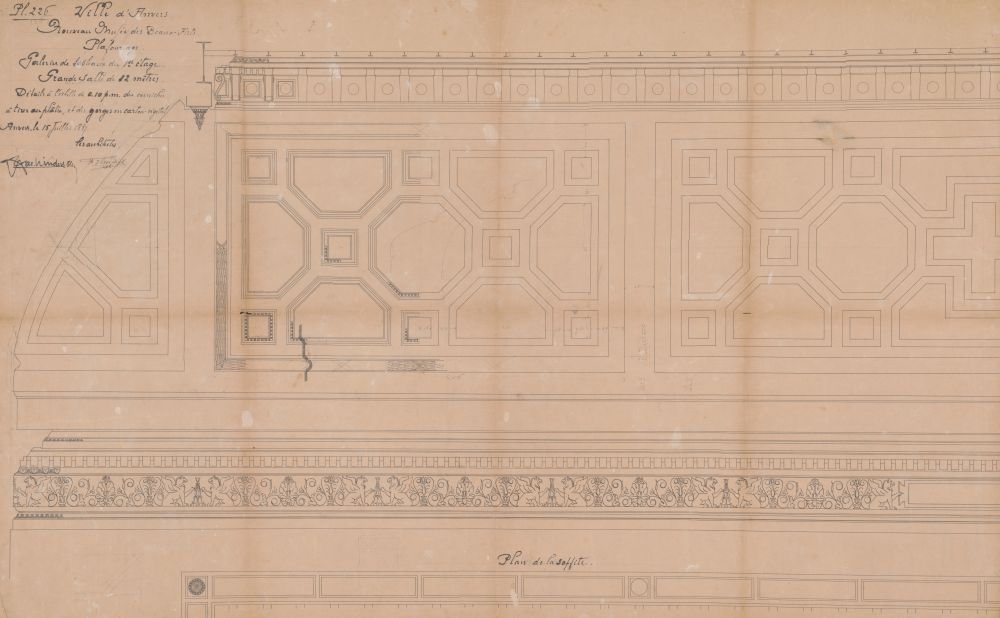
Design for the mouldings by architects Winders and Van Dijk.
Pronounced vision
But what did the halls look like in 1890? The Agency for Immovable Heritage delved into the museum archives in search of the answer. The correspondence between architects Winders and Van Dijk revealed a pronounced vision. The correct colour finish was essential. To give the halls a royal appearance, the walls of the galleries of honour were given an antique red colour. For the higher parts of the hall, such as the ceiling, they chose light brown tones. The whole had to blend together “pour obtenir une harmonie complète de l’ensemble.”
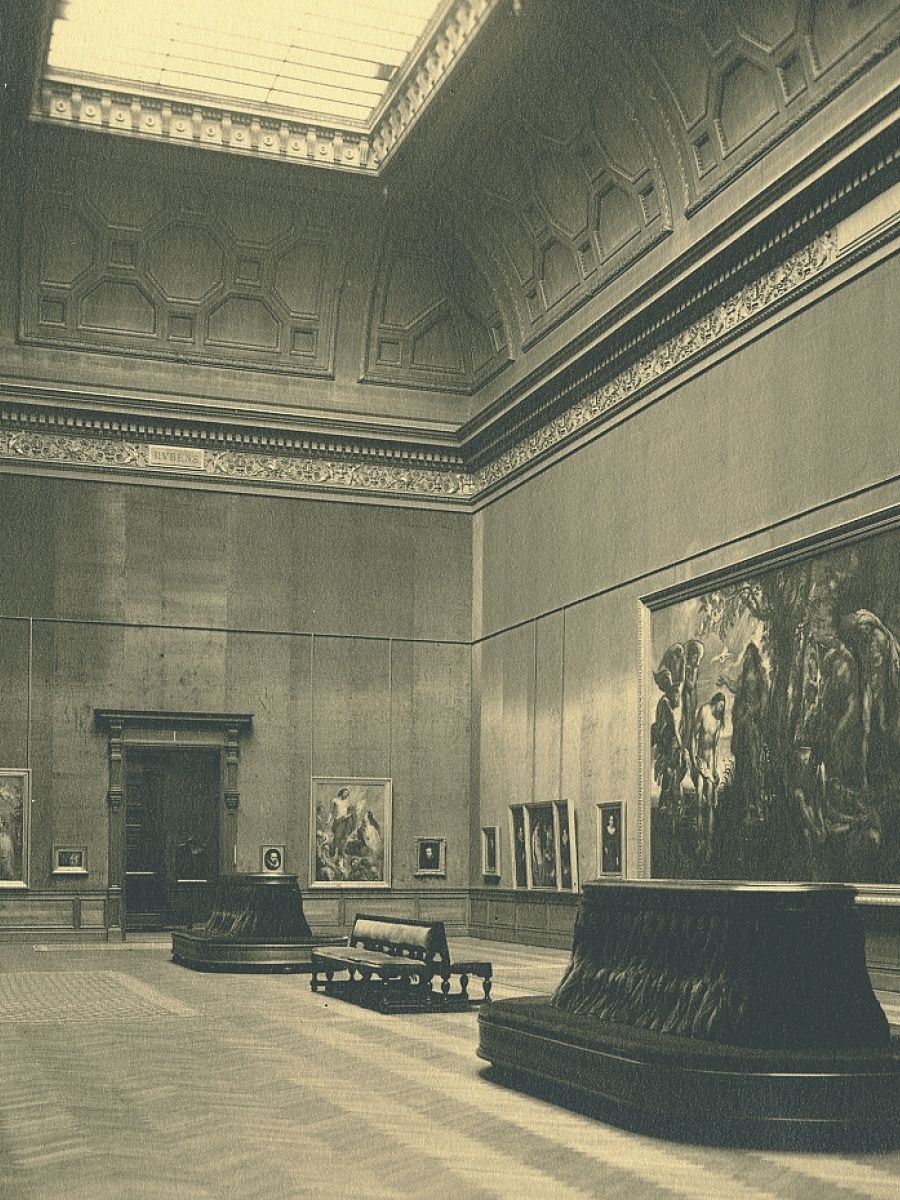
The Rubens Hall in 1920. - © KMSKA Archive
To complete the halls, a touch of gold on the mouldings would not go amiss. Gold was perfectly in harmony with the red and brown tones of the rooms and added that extra prestige — not unimportant for halls that form the beating heart of the museum. The two architects already had experience with gold. In the Keyser Hall, the monumental staircase, they used gold leaf to honour the prestige of the space.
However, a limited budget forced the architects to explore alternative options. They conducted research and requested samples from other museums in Europe. Correspondence reveals that they opted for the more affordable silver leaf with gold varnish. In this way, Winders and Van Dijk created a rich effect with modest means.
Searching for layers
The original finishing layer of the mouldings was examined further in situ. On top of the original layer are two overpaintings applied during previous renovations. The most recent dates from 1977, Antwerp’s Rubens Year. This layer is easy to remove with a solvent, but the underlying layer proves more stubborn. It has bonded to the original layer, making them indistinguishable from each other.
Microscopic research at the Royal Institute for Cultural Heritage (KIK-IRPA) ultimately provides insight into the composition and structure of the original gilding layer. What does it reveal? The original layer consists of a metal foil with a varnish layer on top. Together, they create the illusion of gold leaf.
In the 19th century, it was not uncommon to choose metal leaf as a finish for interiors instead of the expensive gold leaf. Silver leaf was an option but less durable. Aluminium, on the other hand, does not discolor through oxidation and achieves the same visual effect.
It turns out that Winders and Van Dijk used materials different from those mentioned in their correspondence.

The mouldings in the demolition phase. During this phase, contractor Artes Roegiers temporarily removed the cornices. Quite a feat! Some mouldings underwent restoration, while others were replaced. - © Karin Borghouts

© Karin Borghouts

© Karin Borghouts

© Karin Borghouts
The restoration
Today, the conservators from Altri Tempi can apply the gilded decoration in two ways. They can either finish the mouldings using the same method as the architects, with aluminium leaf and a coloured varnish layer, or they can gild the ceilings, which requires no coloured varnish.
In consultation with the Agency for Immovable Heritage, the choice was made to follow the original method: a combination of aluminium and pigmented varnish.
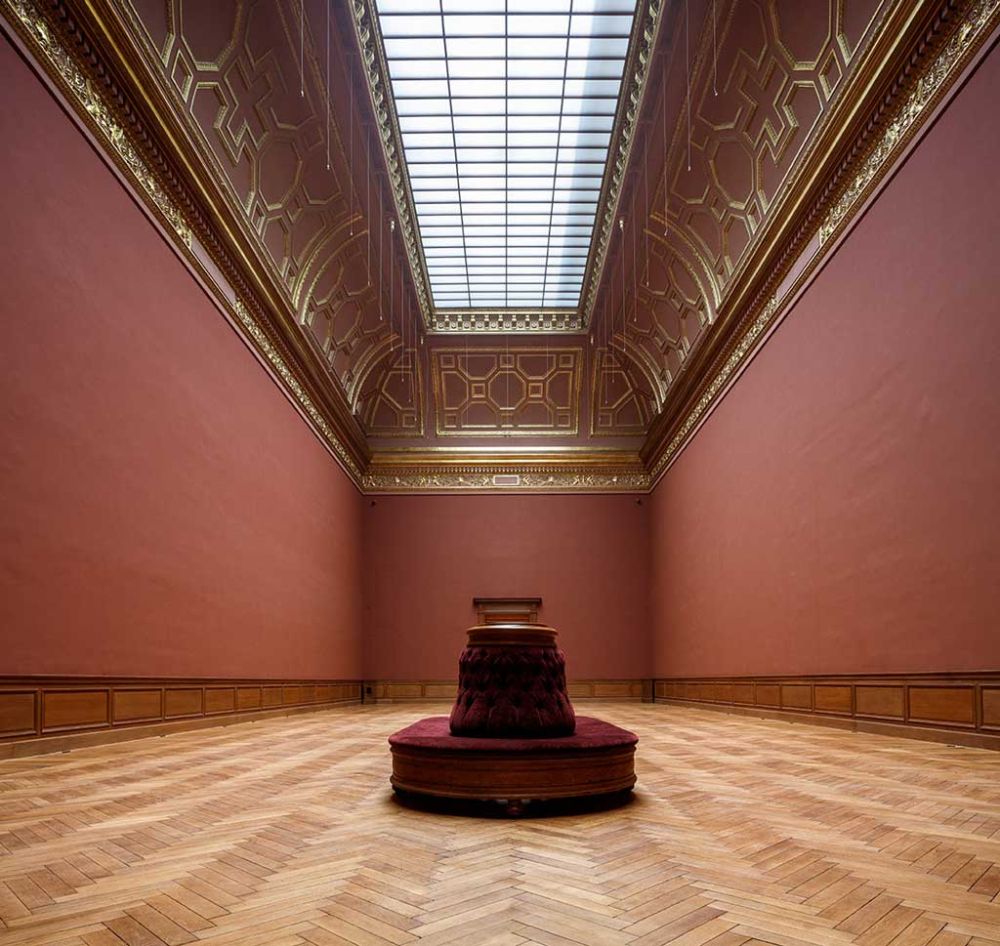
The result speaks for itself. - The Rubens Hall after the restoration of the mouldings.