Two new insights about the collection

Rembrandt Bugatti portrayed a close friend
Véronique Van Passel identified the lady depicted in Madame Crozier, née Jeanne de Plunkett, in Evening Dress by Rembrandt Bugatti (1884–1916). Her name was Jeanne de Plunkett (1864–1950), also known as Madame Crozier. Jeanne was the second wife of François Gaspard Crozier, the French consul-general in Antwerp. In 1907, the young Bugatti settled in the city on the Scheldt, invited by the then world-famous Zoo to create animal portraits. The animalier was a welcome guest at the Croziers’ home. The bronze sculpture is a unique piece, made for the Croziers—either on commission or as a gesture of friendship.

Rembrandt Bugatti

Madame Crozier, née Jeanne de Plunkett, in Evening Dress - Rembrandt Bugatti, KMSKA
How were we able to identify Jeanne? Two bronze sculptures, Madame Crozier la Parisienne and Madame Crozier en robe, at the Musée des Arts Décoratifs in Paris, along with a plaster bust at the Musée d’Orsay, show a striking physical resemblance to the figure of the KMSKA statuette. Madame Crozier, née Jeanne de Plunkett, in Evening Dress is therefore a fourth portrait of Madame Crozier in a fashionable outfit.
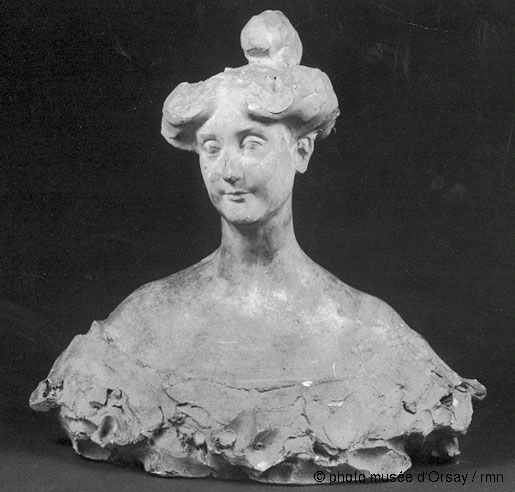
Madame François Crozier - Rembrandt Bugatti, Musée d'Orsay
Joseph Nicolas Robert-Fleury was a close friend of Nicaise De Keyser
In 1862, the French artist Joseph Nicolas Robert-Fleury astonished the people of Antwerp with a monumental painting of the dead Titian (ca. 1488–1576). The Italian artist is depicted lying in state in the Palazzo Barbarigo in Venice, beneath one of his most famous works, The Assumption of the Virgin. This represented a remarkable enrichment for the Academy Museum.
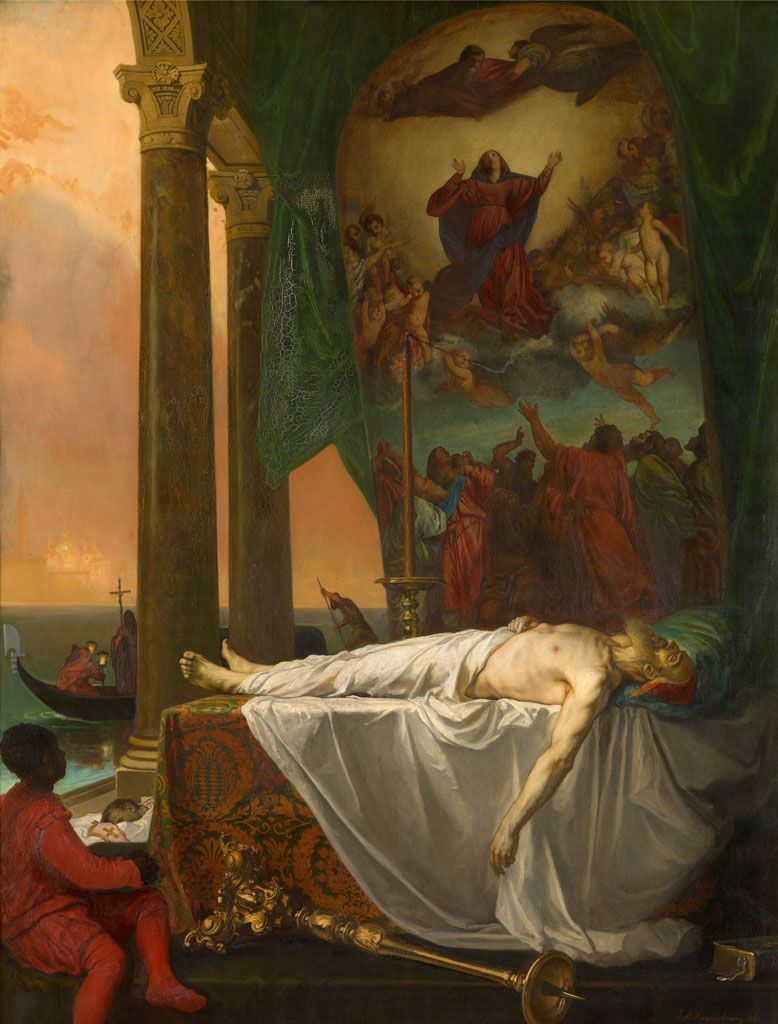
Titian Lying in State at the Palazzo Barbarigo - Joseph Nicolas Robert-Fleury, KMSKA
In 1870, the artist himself arrived in the city on the Scheldt. In the aftermath of the Franco-Prussian War, impoverished Paris was on the brink of a new conflict, this time with French Prime Minister Thiers. After a popular uprising, a group of revolutionaries managed to govern Paris for 72 days before being violently defeated. Many Parisians fled the city at that time.
Robert-Fleury also preferred to be elsewhere. Siska Beele discovered that he found lodging in Antwerp with his colleague Nicaise De Keyser. It was a productive period for the Parisian artist. Among other works, he painted a portrait of Titian, which he dedicated in gratitude to his old art companion and fellow academician De Keyser—a clear nod to his celebrated painting for the Academy Museum.
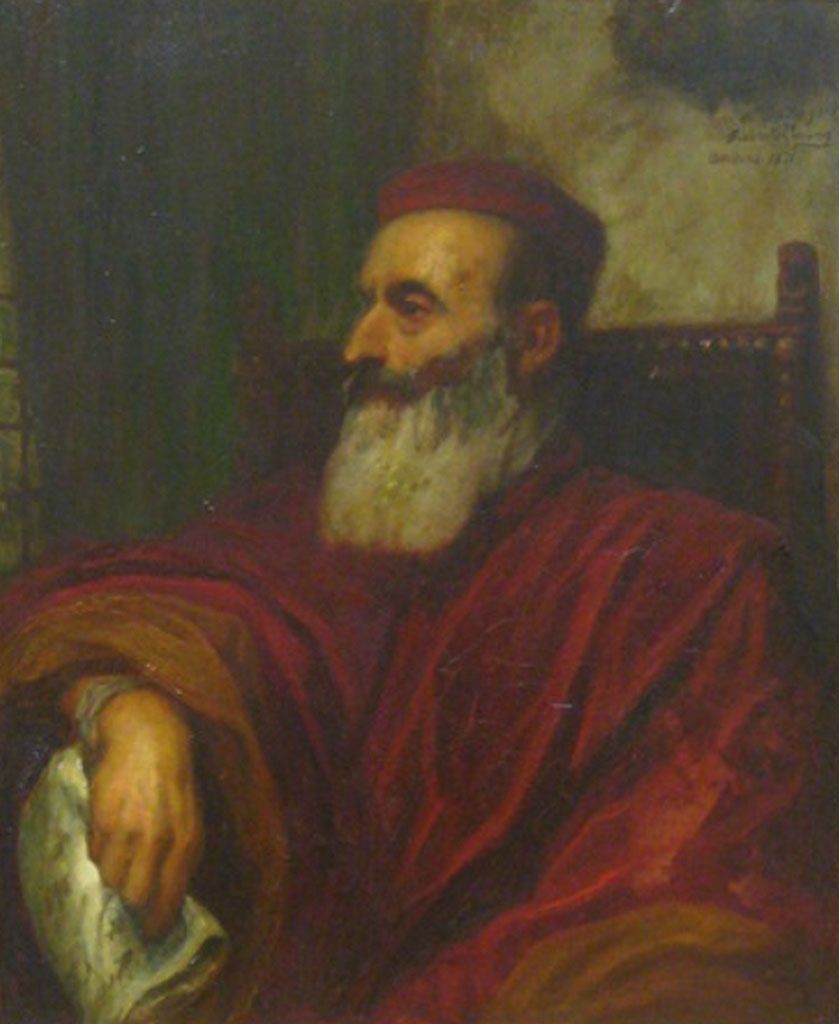
The painter Titian - Joseph Nicolas Robert-Fleury