6 benefactors who adored Rik Wouters

The museum has a total of 113 works by Rik Wouters (1882–1916): 26 paintings, 19 sculptures, 66 works on paper, a wallet, his last cigar, paintbrushes and other objects besides. It didn’t take long for several directors of the KMSKA to develop an immense love for the Brabant Fauvist’s work, to which they regularly added further examples beginning with the purchase of Wouters’ most iconic sculpture, the Mad Maiden, in 1920.The rest has been supplemented by passionate collectors and people with whom Wouters enjoyed a special bond.
1. Nel: guardian angel
Hélène Duerinckx (1886–1971) – Nel to her friends – was the artist's wife, muse and model. Wouters captured Nel’s many facets in paint, bronze and pencil, presenting her to us as a vivacious, caring, well-read, attractive, intelligent, home-loving and devoted woman.
Following her husband’s tragic early death in 1916, Hélène continued to manage his artistic legacy. She worked hard until her own death in 1971 to place his work in major public and private collections, including the KMSKA. She approached our institution in 1927, stating that she wanted ‘to do something for the Antwerp Museum, as it was the first to accept Wouters’ work...’ – a reference to the acquisition of the Mad Maiden, seven years earlier.
Between 1927 and 1956, Hélène ultimately sold four paintings, two bronzes, seven watercolours and 18 drawings to the museum, but she also donated two works and a watercolour box. Rik’s Self-Portrait of 1903–04 is his earliest work in the collection and could hardly be more different to the second donation, Resting Woman. From academic and dark to intimate and light: the evolution of Rik Wouters in two works.

Rik Wouters - Self-Portrait

Rik Wouters - Resting Woman
2. Ludo: voracious
The Antwerp doctor and art collector Ludo van Bogaert (1897–1989) was a close friend of Rik’s widow Hélène. They wrote around 180 letters to each other between 1949 and 1971. Van Bogaert purchased works by Rik both directly from her and from exhibitions.
He collected as voraciously as he worked: Ludo was a leading international neurological researcher with 753 publications to his name, and he also collected hundreds of antiques, works of art, books, tapestries, carpets, silverware, ceramics and glass.
The Royal Library in Brussels inherited his extensive archive and book collection following his death, while 13 paintings by Rik Wouters went to the KMSKA. They included the poignant Self-Portrait with Black Eye Patch, six watercolours, two pastels, 25 drawings, eight sculptures and numerous objects, one of which was Rik’s last cigar. This emotionally charged item testifies to Van Bogaert’s connection with Hélène and his passion for Wouters’ work.
The rest of the doctor’s estate was auctioned off, with the proceeds going to neurological research.

Rik Wouters - Reading Woman

Rik Wouters - Self-Portrait with Black Eye Patch
3. Eppe: tower of strength
Eppe Roelfs Harkema (1869–1938) paid for the medication and two operations that Rik Wouters needed after 1915 to treat his cancer of the jaw. To thank him for his kindness, as Hélène put it, Rik gave him several paintings and drawings, confirming that the Dutch tobacco merchant was an art-lover. He collected the work of Rik’s contemporaries and actively supported artists. It goes without saying that he bought paintings by Rik too, via the Van Wisselingh gallery. On his death, Eppe left a number of items to the Rijksmuseum in Amsterdam, including seven drawings that Rik had given his benefactor.
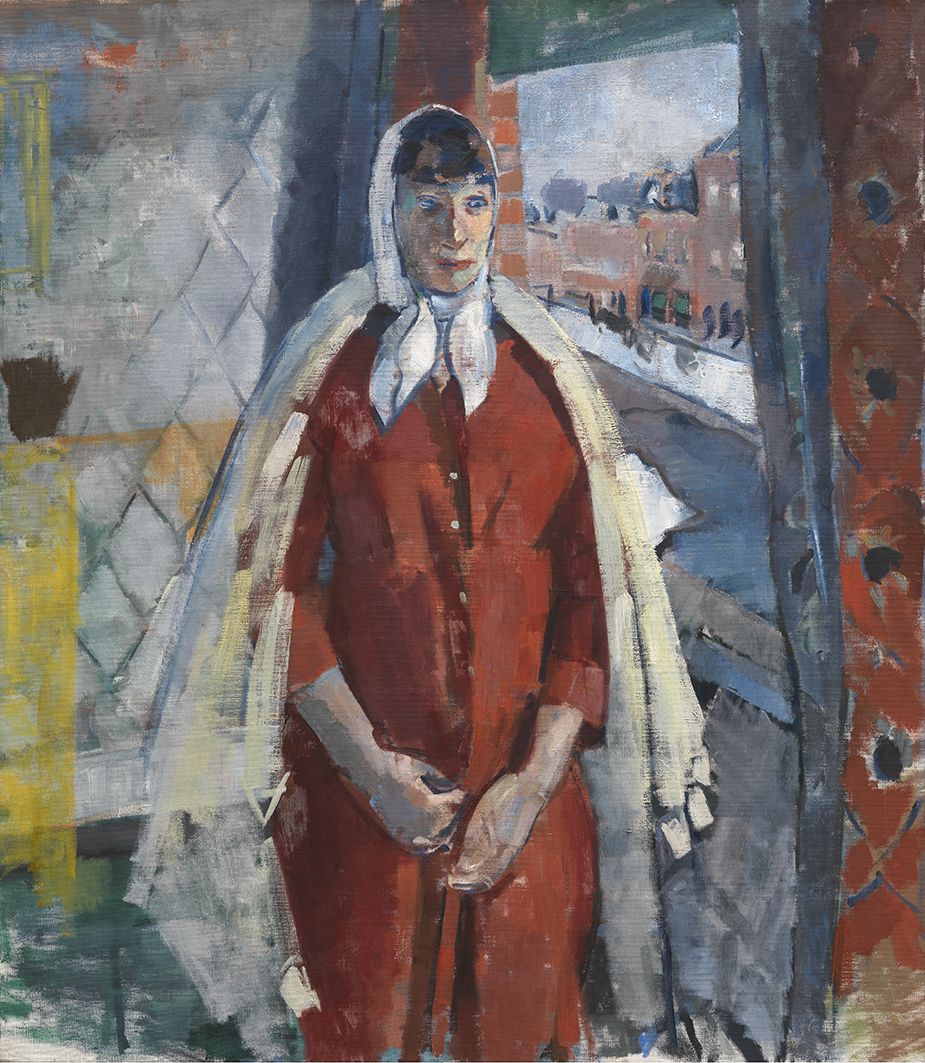
The KMSKA was the only Belgian museum to which he donated a work. Through Hélène, he presented the museum with Woman at the Window in 1935.
4. Jozef: larger than life
In the 1960s and 70s, Jozef Komkommer (1911–1980) organized spectacular parties at his home, ‘Villa Shalom’, named in honour of his Jewish roots. He spent the period 1930–46 as the representative of the Antwerp diamond trade in Java, where he met his Swiss Protestant wife Jacqueline. When the Dutch colony was occupied in the Second World War, the Japanese separated Jozef from his wife and son. They put him to work as a slave labourer in a concentration camp, just as the Nazis were murdering almost his entire family in the West.
When he was eventually reunited with his wife and child in Antwerp, he set about building a new diamond empire. Jozef's guests at Villa Shalom included prominent Israeli politicians like Yitzhak Rabin and Golda Meir, alongside artists such as Paul Delvaux and Hollywood stars.
He filled the villa with art, so it was not entirely a surprise when he approached the KMSKA in 1977 to offer the original plaster version of Rik Wouters’ Smiling Mask along with a bronze casting of it. Items you wouldn’t find in Ludo van Bogaert’s collection, Komkommer couldn’t resist pointing out in his letter...

Rik Wouters - Smiling Mask (plaster)

Rik wouters - Smiling Mask (bronze)
5. François: the lynchpin
The importance of the Franck family – especially François Franck (1872–1932) – to the KMSKA can’t be summed up in a few lines. Between 1920 and 1964, François and his heirs donated over 60 works of art to the museum, both individually and as a family.
Yet that number says little about François’ incredible passion. Not only was he a member of several art associations, he also founded the influential ‘Kunst van Heden’ (Art of Today) society. He sat on the KMSKA’s board of trustees and also lent the museum money to make acquisitions and helped shape the layout of the collection. François collected and donated works, and encouraged those around him to do the same. The wealthy clients for whom he designed luxury furniture and complete interiors could well afford it.
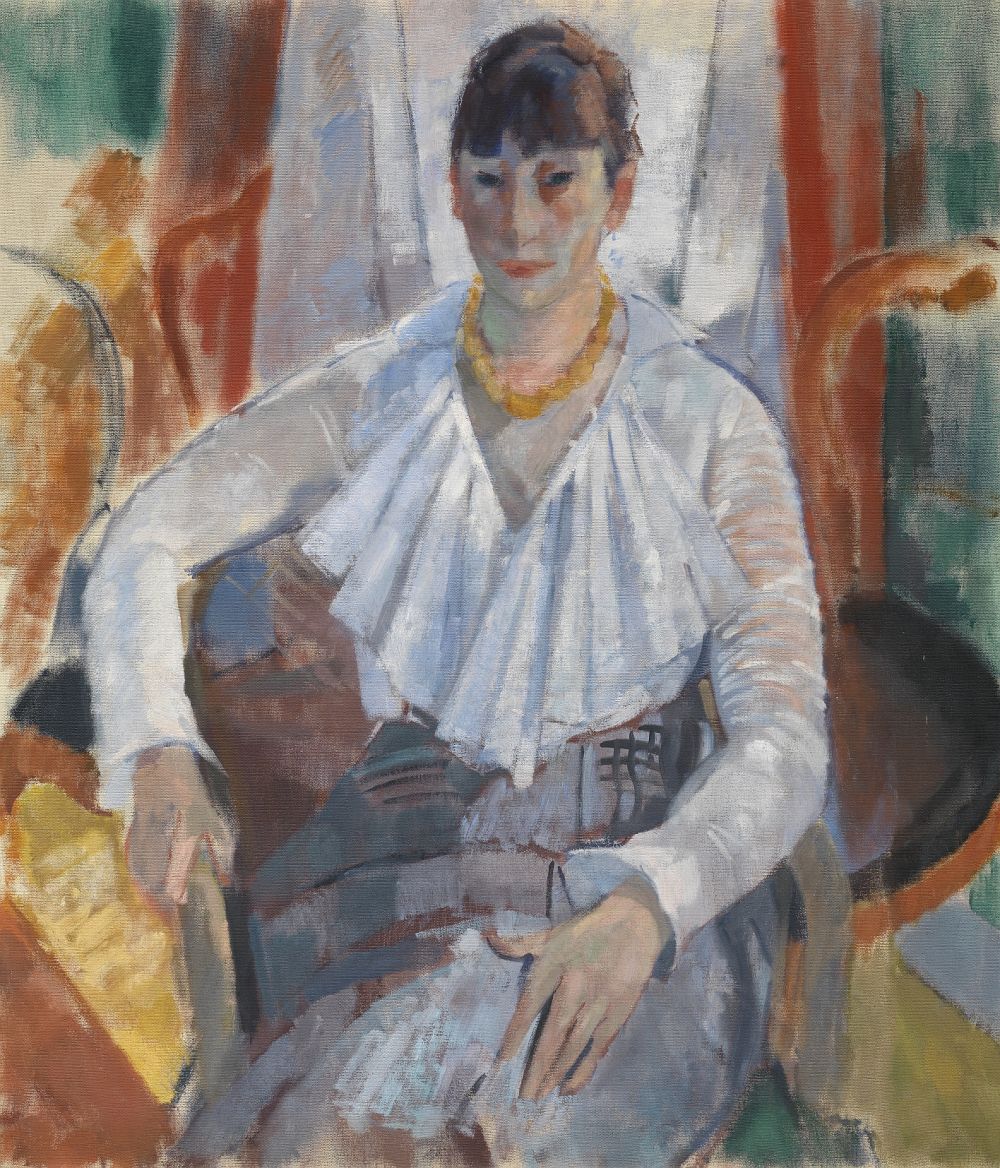
As an art dealer, he was right there at the source, not to mention James Ensor’s most important sponsor. It was through François, therefore, that many of the museum’s Ensors found their way here, either from his own collection or – thanks to his powers of persuasion – via his network. François himself collected 11 works by Rik Wouters and donated Woman in White to the museum in 1930. Wouters, like Ensor, satisfied the collector’s taste for bright colours which, after François’ death, came to be seen as ‘Kunst van Heden taste’ too.
6. Enrique: always busy
Born in Buenos Aires but intimately attached to Antwerp: Enrique Mistler (1893–1970) arrived at the Flemish port in 1913 as a trainee and ended up staying.
Banker, financier, consul, entrepreneur and company director were just some of his occupations. He was also associated with the Cercle Artistique, the Antwerp Opera and the German bookstore Kornicker. Enrique sat on the museum’s board of trustees and was treasurer of ‘Kunst van Heden’ and other art associations.
He negotiated the price of acquisitions and combed auctions for likely purchases. Mistler was a collector in his own right too and married Marthe, a member of the Frank dynasty. In short, Enrique breathed art and rarely seems to have slept. In 1921 he was involved in the group purchase of eight Ensors for the museum and in the period between the World Wars he donated five works of art from his own collection.
Dreaming (x2) by Rik Wouters was a unique addition to the KMSKA collection, as the plaster sculpture was only cast in bronze once.

Rik Wouters - Dreaming

Rik Wouters - Dreaming (plaster)